

“We cannot expect that students will profit from the incongruous messages we send them when we manage for compliance and teach for exploration and risk-taking.”
Latest Additions
- Queen Victoria's personal physician: Sir James Simpson 17. August 2026
- Christian Worldview of English Literature 01. April 2026
- Visual Valet 2nd edition available in paperback 28. Januar 2025
- Philosophy of education shaped by the Biblical worldview 02. Dezember 2023
- Have faith and experiment 13. Juli 2023
Reflections
Browse these articles from the Transforming Teachers staff.
John Stonestreet from Summit got my attention in an article he wrote March 12, 2009.
“Personally, I am much more concerned about how we are reading than what we reading. Most of the students I work with, in high school and college, show just an utter lack of discernment in both their reading choices and their reading practice. Not that we should just read anything—that is actually my point. When the average Christian cannot tell the difference between good books and bad ones, the bigger problem is with the Christian who is reading and not the book being read.
I offer you two great quotes, and one great book, on this way of thinking:
- “For every new book, read three old ones.” (C.S. Lewis)
- “If you still buy the books at the front of the Christian bookstore, stop it.” (Kevin Bywater)
- Neil Postman, Amusing Ourselves to Death: Public Discourse in the Age of Show Business (1985)."
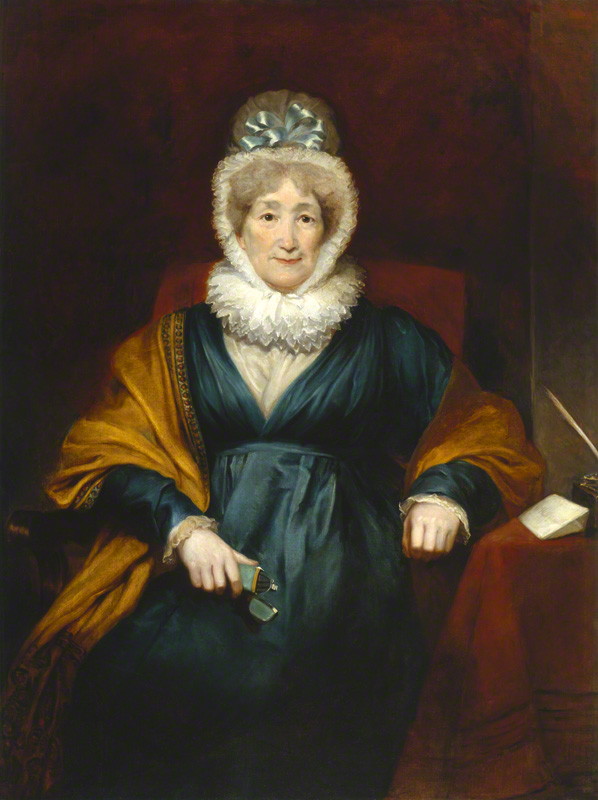 Today I discovered an influential educator about whom I knew nothing—Hannah More. Learning more about people who have sought to see a Biblical worldview shape their understanding and practise of education is both interesting and helpful, especially when they are able to communicate why and how they do what they do. Although two hundred years is plenty of time to forget an individual's contribution, it is now possible to understand more of the breadth of a person's influence. Hannah More is best known as a writer and advocate for the abolition of slavery, but education was also an area where she used her gifts to challenge the status quo in education for middle-and upper-class girls as well as lower-class children in Sunday Schools. As a member of the Clapham Sect she was part of a group that played a pivotal role in the transformation of English society at the beginning of the 19th century.
Karen Swallow Prior, Professor of English at Liberty University, wrote Fierce Convictions: The Extraordinary Life of Hannah More—Poet, Reformer, Abolitionist which looks at Hannah's life and achievement from a somewhat different perspective than Anne Stott's, Hannah More: The first Victorian. Dr. Prior was interviewed by Dr. Beth Green who is Program Director for Education at Cardus in "Hearing lost voices: Risky friendships and faithful presence." Obviously, I haven't had time today to ready both of the books and the many articles I've discovered, but my reading list just got a bit longer. You can get started with the the interview and then go to the very condensed version at Awesome Stories–another discovery today, Wikipedia, or a host of other sources. Finding out that Eric Metaxas had written the foreword of Karen Prior’s book was an added bonus because his biographies about William Wilberforce and Dietrich Bonhoeffer come highly recommended as well.
Getting a Biblical worldview isn’t as simple as reading a book or going to a seminar. Our personal worldview or life auto-pilot, is programmed by all that we experience. Both our nature and nurture shape the way that we function in the world with personal choices strongly affecting the relative influences of all the different inputs. Our family, culture and language play a huge role in creating patterns of thinking and behaving that are subconscious but profoundly powerful. Instruction can quickly change what we know, but worldview changes are much slower.
Changing the way we do something as “simple” as demonstrates how difficult it is to ”change your mind.”
 Scott Hayden at the International Community School in Thailand has been instrumental in helping the school think about developing discerning thinkers.
He has very helpful examples of the importance of avoiding assumptive language—a very real problem, especially when assessing students. An important part of the power of education to shape thinking is the assumptive language of the teacher, but it is easy to misuse the power to coerce responses rather than allow individual choice. In all environments, it is easy to misuse the power of teachers to get students to say what the teacher wants them to say. As Christians, we want students to know and love God through Jesus Christ and in the power of the Holy Spirit unselfishly love others. However, producing “marks Christians” doesn’t honor the God who graciously and humbly allows personal choice even though the majority of His creation reject His love.
Especially in a mixed environment where there is a very wide range of perspectives on Biblical truth, it is important to consider the words that we use. Many teachers find themselves in an environment hostile to the overt presentation of truth, but this video not only points them away from pitfalls, but towards new opportunities for truth to be considered. Christians should be interested in critical and discerning thinking because of our understanding of God’s image in all people. We, of all people, should promote the development of the God-given gifts of logic, understanding and communication. Asking the right kind of questions can open rather than close consideration of controversial ideas.
- Creation care
- Christian scholarship is not an oxymoron
- Life on the frontline
- Work = Worship
- Workplace ministry
- Christian or Christ-in education
- Work of the Lord
- Faith
- River Out of Eden
- Do Christian schools make students more religious?
- Anyone hear a trumpet?
- Missional defined
- Subject area big picture
- CSM - missional Christian school
- What is missional Christian education?
- The classroom: Place of ministry or door to ministry
- Would Christmas have occurred if humanity had not sinned?